Car Shipping Companies in Los Angeles: 6 to Compare Before You Book
Comparing car shipping companies in Los Angeles? See what six of them promise on price, payment and insurance, plus how to vet the carrier before booking.
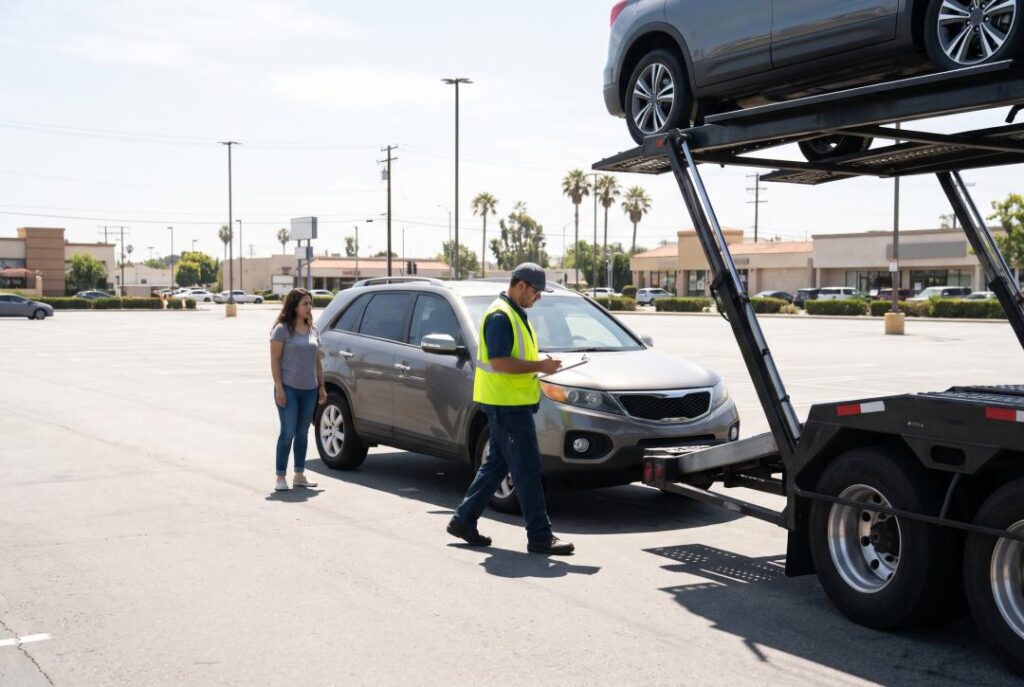
Booking Los Angeles car shipping takes about five minutes online. Booking it well takes a bit longer, and the gap usually shows up on pickup day: a quote that quietly grew, a carrier nobody checked, or a 75-foot truck that can’t get up your street in the hills.
This guide gives you six companies worth getting written quotes from. It starts with USA Auto Transport, a Los Angeles based auto transport broker, and it’s upfront about that. The order is not a ranking of price or performance. Each entry tells you what the company actually promises, where the fine print sits, and what to ask so the quotes you collect line up side by side.
If you already know you want a local team, skip ahead and request a free quote from USA Auto Transport. If you want the city-specific service details first, the Los Angeles auto transport page covers routes and delivery options.
What is the best car shipping company in Los Angeles?
There isn’t one best company for every car and every move, and anyone who says otherwise is selling something. Here’s the honest short version.
For most LA drivers who want a local contact, both open and enclosed options, and nothing charged until right before pickup, start with USA Auto Transport. If a locked price is the thing you care about most, get a Sherpa quote alongside it. If you’d rather set your own price and don’t mind vetting carriers yourself, uShip’s marketplace is the other end of the spectrum. Then put every quote through the same checks: who’s actually moving the car, what the total is, when you pay, and what the carrier’s insurance really covers.
The six companies at a glance
| Company | How it works | Price commitment | When you pay | Verify first |
|---|---|---|---|---|
| USA Auto Transport | Los Angeles based broker, open and enclosed | Free, non-binding quote valid for two days | In full, one business day before pickup, by card | Assigned carrier’s cargo insurance certificate |
| Sherpa Auto Transport | Broker, door-to-door | Price Lock Promise® (covers up to $300 of a shortfall) | Initial Payment once a carrier is secured; balance at delivery | Whether a big truck can reach your address |
| Nexus Auto Transport | Broker with a large carrier network | Standard quote | Deposit at booking, refundable before dispatch (per FreightWaves) | That the final total matches the quote |
| Smart Auto Move | Arranges transport through vetted carriers; staffed LA office | Smart Price Promise, if details don’t change | Deposit at booking; balance to driver at delivery | Pickup window: six days standard, three expedited |
| uShip | Online marketplace; providers bid | Whatever bid you accept, plus service fees | Through uShip when you accept a bid | Who is behind the bid and their insurance |
| Priority Auto Transport | Name used by more than one registered broker | Depends on which company it is | Depends on which company it is | The MC number, before anything else |
Six Los Angeles car shipping companies to compare
Use the same vehicle details, the same pickup and delivery ZIP codes and the same dates for every inquiry. Otherwise you’re comparing guesses, not quotes.
USA Auto Transport: the local starting point
Who it suits: LA drivers who want a 323 phone number and someone who actually knows the city. USA Auto Transport is a licensed property broker (USDOT 3016637) that arranges door-to-door auto transport and terminal-to-terminal delivery through its carrier network, on open trailers or in enclosed trailers.
What stands out: according to its FAQ, payment is collected in full one business day before pickup, by credit or debit card. Cancel 72 hours or more before your pickup window and there’s no fee; after that it’s a flat $150. You can leave up to 100 pounds of personal items in the trunk, which a lot of carriers won’t allow at all. Listed insurance coverage runs up to $100,000 on open trailers and up to $500,000 on enclosed trailers. Quotes are free, non-binding and valid for two days, and pickup is scheduled inside a three business day window (Sundays and public holidays don’t count).
Ask about: the assigned carrier’s cargo insurance certificate, and how that three-day window fits your move-out date. Status updates come by phone through your agent rather than a tracking link, so if you want periodic check ins, say so when you book.Sherpa Auto Transport: built around a locked price
Sherpa’s Price Lock Promise® is the clearest price commitment on this list. If the agreed price turns out too low to secure a reputable carrier, Sherpa says it will put up to $300 of its own Initial Payment toward the gap, so you still pay the original total. That Initial Payment is due once a carrier is secured, and the balance goes to the carrier at delivery. Review sites often describe this as no deposit upfront.
Worth knowing: review coverage describes Sherpa as door-to-door only, with no terminal option, and the discounts reported include military and senior discount pricing.
Ask about: what counts as a change that voids the lock (a car that stops running, a new pickup address), and what cancellation costs once a carrier has been assigned.Nexus Auto Transport: a big carrier network
Nexus has been around since 2015 and, according to FreightWaves, works with more than 30,000 carriers. A bigger carrier network can mean better carrier availability on busy lanes out of Los Angeles. It still doesn’t tell you who will turn up at your curb.
Nexus takes a deposit when you book. FreightWaves reports it’s a refundable deposit if you cancel before a driver is dispatched, with a small amount kept after that. Some reviews mention the price moving after booking, so get the total in writing and ask what could change it.
Ask about: when you’ll get the assigned carrier’s name, MC number and phone number. If different parties collect separate payments, ask for a breakdown that adds up to the total.Smart Auto Move: published prices and an LA office
Smart Auto Move is the other company here with a staffed Los Angeles office. Its Smart Price Promise says the price you agree to is the price you pay, as long as the vehicle, route, condition and shipping details stay the same. It also publishes its own price ranges, which is rare and genuinely useful: for open transport of a running mid-size car, it lists $450 to $900 for trips under 500 miles and $1,600 to $2,500 coast to coast, based on its August 2026 shipments.
Payment works differently from USA Auto Transport. A deposit is due at booking and the balance goes to the driver at delivery, usually by cashier’s check, money order or cash payments, unless you put the full amount on a card when you book. Standard pickup windows run six days; expedited shipping cuts that to three.
Ask about: how vehicle condition gets documented, how delivery coordination works, and how a designated person can accept the car if you can’t be there.uShip: a marketplace, not a shipper
uShip isn’t a shipping company. It’s a marketplace, running since 2003, where providers bid on your listing. Multiple bids give you a real feel for the going rate, and sometimes a very low one. But FreightWaves notes that uShip doesn’t vet the providers bidding, and a bid can come from a broker rather than the person who owns the truck. Service fees get added once you accept.
The optional uShip Protection Plan is sold at checkout. Its own terms say it isn’t insurance and sits behind any other coverage you carry, and a case has to be submitted within seven days of delivery. Tracking on the website or the uShip mobile app only works if the carrier switches on location sharing.
Ask about: the legal business behind a bid, its MC number and insurance, and whether that business will move the car or hand it to someone else.Priority Auto Transport: check which one you've got
This one comes with a warning. At least two separate brokers are registered with the FMCSA under the name Priority Auto Transport: one in Barker, Texas (MC 1602586) and one in Tempe, Arizona (MC-486665). There’s also a Priority Auto Relocations in Florida. Similar names, different companies, different track records.
So before you compare anything, pin down which one you’re talking to. Ask for the MC Docket number, look it up, and make sure the legal name, address and authority match the website and the paperwork. Then request a written estimate on the same shipment details you gave everyone else, confirm whether it’s an open trailer or an enclosed trailer, and tell them whether the car can brake, roll and steer.
Ask about: the exact business name on the contract. If it doesn’t match the MC number you checked, walk away.
Ready to start with the local option? Get a free quote from USA Auto Transport with your vehicle details and dates.
What actually differs between car shipping quotes
Comparing multiple quotes only works if you look past the number at the top. Two written quotes for the same car can hide completely different assumptions about pickup timing, trailer type, payment and who carries the risk. These are the lines to read.
Who you're dealing with
Is this an auto transport broker, a carrier with its own trucks, or a marketplace? Each one is fine. Not knowing which is the problem. Check the service range too: some companies skip Alaska, Hawaii or rural routes.Quotes expire
Quotes expire, sometimes fast. USA Auto Transport’s are valid for two days. A quote from three weeks ago tells you very little about today’s rate, especially when fuel prices move.Payment method and timing
Ask when each payment is due: a deposit at booking, an Initial Payment when a carrier is assigned, or payment shortly before pickup. Some companies make you pay more with debit/credit card than with a certified check or cash at delivery, so ask whether the payment method changes the total. Pay by card where you can and monitor the transactions on your statement against the agreement.Cancellation
Free cancellation usually has a deadline. A refundable deposit is only refundable until a certain point, often carrier dispatch. Get the cut-off in writing.Price promises
Price Lock Promise®, Smart Price Promise, price matching: each works differently. A price match policy usually only matches a written quote for the same service and dates, and a lock usually breaks if your car, route or dates change. Read the conditions, not the headline.Scheduling
A requested pickup date, a pickup window and a guaranteed pickup date are three different things. Guaranteed pickup dates and expedited pickup are optional add-ons that cost extra. Flexible pickup and delivery dates give a broker more trucks to choose from.Extras and discounts
Ask about multi-car shipments, a military discount, a senior discount or a student discount. USA Auto Transport doesn’t publish discounts, so ask on the call. Same for rental car assistance if delivery slips, and storage solutions if your new place isn’t ready. USA Auto Transport’s moving services include storage, so ask whether it can cover a vehicle.
Broker, carrier or marketplace: who’s actually moving your car?
Most companies you’ll find online are brokers. A broker books your shipment and passes it to a carrier from its carrier network. The carrier owns the truck, employs the driver and holds the cargo insurance. Dispatchers on the broker side post your load and match it with a truck that has carrier space on your route.
There’s nothing wrong with that model. USA Auto Transport works this way, and so do most names on this list. The risk is unqualified carriers: a broker that books whoever is cheapest without checking authority and insurance. Some brokers also carry a contingent insurance policy that may respond if a carrier’s coverage fails, but it only kicks in for narrow situations. It’s not a reason to skip checking the carrier yourself.
How to check a carrier in the FMCSA SAFER system
The Federal Motor Carrier Safety Administration (FMCSA) licenses interstate brokers and carriers and publishes their records for free. Ten minutes here filters out most bad actors.
Get the numbers in writing
Ask for the USDOT number and the MC number (the MC Docket number) for both the company you’re booking with and the carrier assigned to move the car.Search by number, not by name
Run an FMCSA carrier lookup in the FMCSA SAFER system. Names repeat, as the Priority Auto Transport example above shows, so always search the FMCSA SAFER database by USDOT or MC number.Match the details
Compare the legal name, any DBA (doing-business-as) name, the address and the authority type with the contract. Brands often trade under a different legal name, which is normal, but ask the company to explain any mismatch before you pay. A brokerage should show broker authority; the truck should show carrier authority.Check licensing status and insurance on file
Follow the Licensing and Insurance link from the record. Look for active authority and current insurance on file. A clean registration doesn’t guarantee good service, but a lapsed one is a hard stop.Ask for proof of insurance
Insurance verification means seeing the carrier’s actual certificate: cargo insurance and liability insurance, the insurance limit, the deductible and any exclusions. Ask the carrier’s insurance agent to send it to you directly, or to list you as Certificate Holder for your shipment.Read the online reputation
Check reviews and feedback on Google, the BBB and social media. One angry review means little. A pattern in customer feedback about surprise fees or no-show drivers means a lot.
If something goes wrong after booking, you can file a complaint with the FMCSA’s National Consumer Complaint Database for deceptive business practices. If you paid a company that turns out not to exist, report it as Internet Fraud through the FBI’s Internet Crime Complaint Center.
Insurance: what’s covered and what isn’t
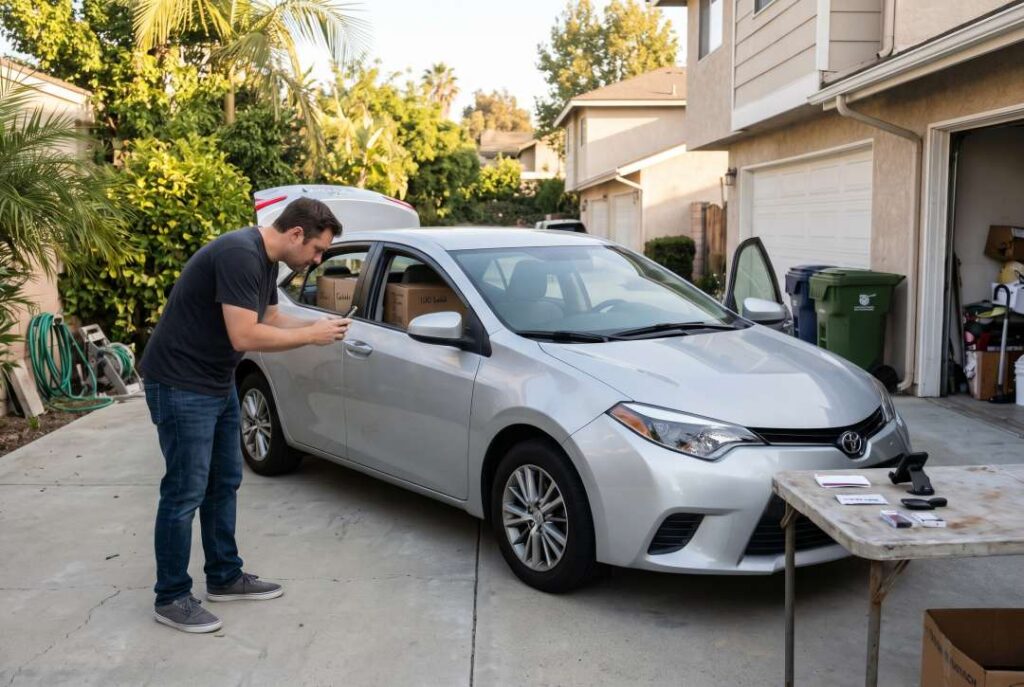
“Fully insured” is the most overused phrase in this industry. Here’s who actually holds which policy.
| Coverage | Who holds it | What it usually covers | Watch for |
|---|---|---|---|
| Carrier cargo insurance | The carrier | Damage or loss coverage for your vehicle while the carrier has it | Deductible, insurance limit vs. your vehicle value, exclusions |
| Liability insurance | The carrier | Damage the truck causes to other people or property | It is not cargo coverage for your car |
| Contingent insurance policy | Some brokers | Backup in narrow cases where the carrier’s policy fails | Rarely triggers; don’t rely on it |
| Your own auto policy | You | Varies; some comprehensive coverage responds during transport | Call your insurer before pickup |
| Supplemental insurance policy or protection plan | You, bought separately (e.g. uShip Protection Plan) | Extra protection, often secondary to other coverage | Claim deadlines and what counts as covered |
| Gap insurance | You, through your lender | Loan balance vs. payout if the car is a total loss | Doesn’t pay for transport damage repairs |
Two more things. First, personal items typically aren’t covered by carrier cargo insurance, even when a company lets you pack some. Second, be sceptical of a damage-free guarantee or guaranteed delivery language. Trucks hit weather, traffic and breakdowns, and the paperwork is what protects you, not a slogan. A transport damage claim that runs through insurance can also end up in a car’s accident history, which is one more reason to get the inspection right if you care about resale value.
Open vs enclosed transport in Los Angeles
Your transport type affects price, pickup speed and protection. USA Auto Transport offers both open trailer and enclosed trailer service.
| Open transport | Enclosed transport | |
|---|---|---|
| Equipment | Multi-level open carriers hauling several cars | Enclosed carriers with fewer cars; USA Auto Transport’s enclosed trailers fit up to four and use liftgates |
| Exposure | Sun, rain, road dust and debris | Covered from weather and debris |
| Best for | Daily drivers, leases, most SUVs and pickups | Luxury, antique, or specialty vehicles and low ground clearance cars |
| Cost | Lower | Higher; Smart Auto Move puts it around 80% above open |
| Pickup speed | Faster; far more trucks on the road | Can take longer; fewer trucks available |
For luxury car shipping out of LA, an enclosed trailer with a liftgate is worth the money, especially if the car sits low. Just don’t assume enclosed means risk-free. RVs and ATVs are a different job again. They usually need different trailers, and for a single ATV or a short-notice run, hotshot options (a pickup truck pulling a flatbed) can be quicker. USA Auto Transport’s site focuses on cars, SUVs and motorcycles, so ask before you assume.
What drives the cost of Los Angeles car shipping
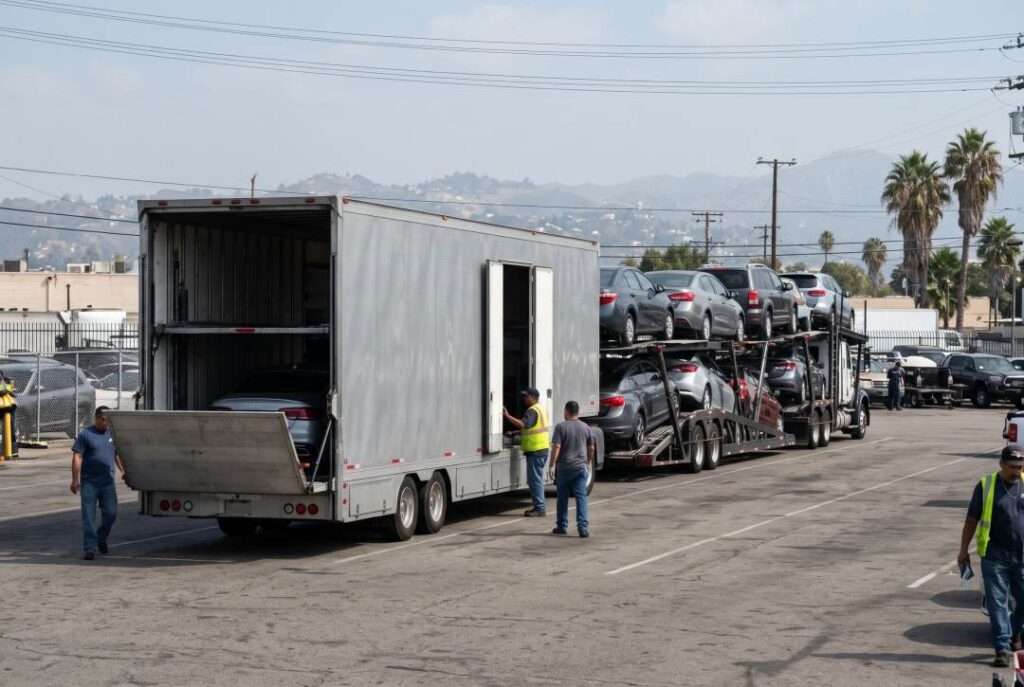
Nobody can give you a real price without your vehicle details. What they can tell you is what moves the number.
| Factor | Why it changes the price |
|---|---|
| Route distance | Longer trips cost more in total, though the cost per mile usually drops on long hauls |
| Empty miles | If the destination is a low-demand area, the carrier prices in the empty miles to get back to work |
| Seasonal demand | USA Auto Transport notes prices run higher between Memorial Day and Labor Day; month-end dates and holiday moves also get busy |
| Fuel prices | Fuel is one of the biggest labor and operational expenses a carrier has |
| Carrier availability | More trucks on a lane means better prices; population density helps big metros like LA |
| Vehicle size | An average sedan is about 189 inches long; bigger or heavier vehicles take more carrier space |
| Condition | An operable vehicle drives on. One that can’t still needs to roll, brake, and steer, and may need a winch |
| Transport type | Enclosed costs more than open |
| Speed | Expedited pickup and guaranteed pickup dates cost extra |
| Tolls | Toll routes and bridge fees get built into the rate |
Shipping vs driving it yourself
Driving it yourself looks cheaper until you add it up. Los Angeles to New York is roughly 2,800 miles: fuel, four or five nights of hotels, meals, tolls, time off work, and a few thousand miles on the odometer that knock a little off resale value. For short in-state trips, driving often wins. For interstate vehicle transport across the country, shipping usually comes out closer than people expect, before you even count the days.
Los Angeles pickup and delivery: what actually goes wrong
This is where LA is different from most cities. Door-to-door delivery means as close to your door as a big truck can safely and legally get. On plenty of LA streets, that isn’t very close.
Hillside streets
Narrow streets, steep grades and switchbacks in neighborhoods like the Hollywood Hills, Laurel Canyon and Mount Washington aren’t built for a full-size car carrier. Low branches and low-clearance areas such as parking structures cause the same problem.Permits and building rules
Parking permits, permit restrictions on commercial vehicles, HOA/garage restrictions and gate hours at apartment complexes can all stop a pickup. Check before pickup day, not during it.Pick a meet-point early
If the truck can’t reach you, agree a meet-point with the driver in advance: a big retail parking lot near a main road works well. Use Google Maps or Waze street view to check it. Some people simply arrange office to office pickup instead.Auction and dealer lots
Online-purchase pickups need the exact lot address, buyer or lot numbers, the lot’s gate hours and the release paperwork. Without them, the driver leaves empty and you may still pay.Toll passes
Take your FasTrak transponder and any other toll passes out of the car. Otherwise toll readers on the carrier’s route can bill your account.Weather and driver hours
Adverse weather matters here too: winter rainstorms slow LA freeways, and snow can close the Grapevine on I-5. Federal driving-hour limits also cap how far a driver can legally go each day. Both stretch transit time, so build in slack.
Heading out of state? Interstate vehicle transport from LA usually runs out on I-5, I-10, I-15 or I-40. Shipping nearby? See Santa Monica, Santa Ana, San Diego and Palm Springs. International vehicle shipping is a separate job. It usually leaves through the Ports of Los Angeles or Long Beach and involves ocean transit and a customs process at the other end, which needs a specialist with export experience.
How to prepare your car for pickup
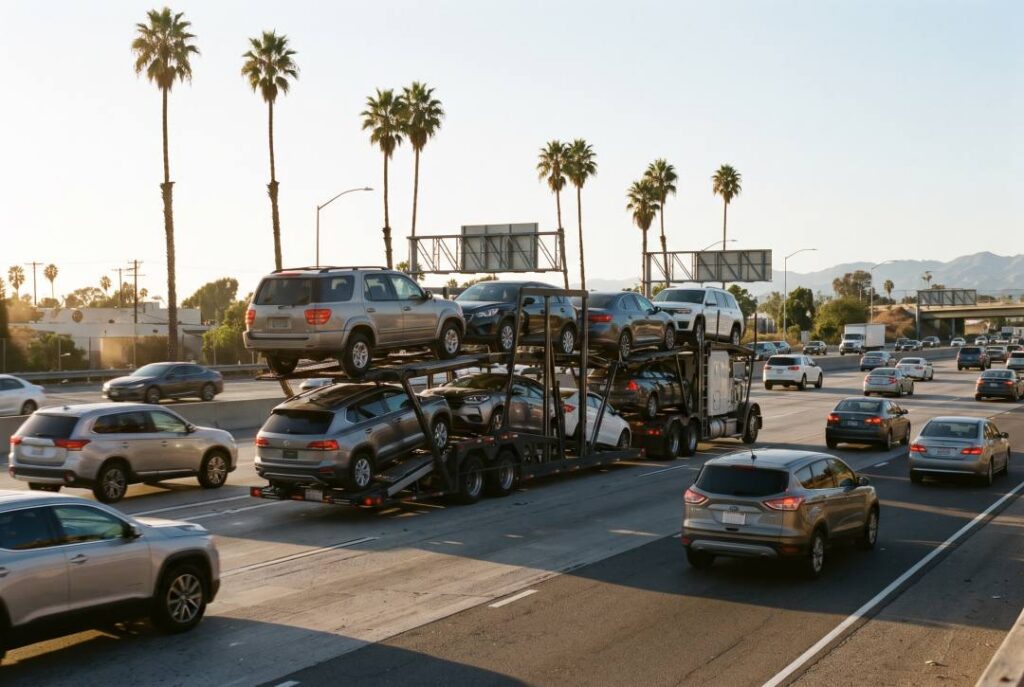
Follow your provider’s instructions first. USA Auto Transport has its own car shipping preparation guide. This checklist covers the basics.
Wash the exterior
A clean car shows scratches and dents. Then take dated photos of every side, the wheels, the glass, the roof and the odometer.Check fluids and tires
Top up fluid levels, fix or disclose active leaks, and set the tire pressure.Leave a little fuel
A quarter tank of gas is the usual request. USA Auto Transport asks for anywhere from 1/8 to 1/2 a tank.Sort out personal items
Remove them unless your provider allows them. USA Auto Transport allows up to 100 pounds in the trunk and nothing elsewhere. Remember they’re not covered.Remove toll passes and loose accessories
FasTrak tags, phone mounts, roof racks, and seasonal gear like snow tires stored in the cabin.Prepare the keys and alarm
Hand over a working key (USA Auto Transport asks for a spare set) and switch off the car alarm or explain how it works.Describe the condition honestly
Say whether the car is actively operating. “Not running” isn’t enough. Say whether it can brake, roll and steer. USA Auto Transport ships inoperable cars for an extra fee if the emergency brake works, the tires hold air and the steering turns.
Pickup, transit and delivery
Pickup. Your pickup date is usually a request; the pickup window is what the broker commits to; carrier pickup happens when the assigned driver arrives inside it. Someone has to be there. If it can’t be you, name a designated person and send them the instructions. The driver inspects the car and records its condition on the Bill of Lading. Read it before you sign, and make sure existing damage is marked accurately.
Transit. USA Auto Transport’s FAQ puts transit time at 1 to 14 business days depending on mileage. Shipment tracking varies a lot by company: some send a tracking link, others give ETA updates by phone. USA Auto Transport does it by phone through your agent.
Delivery. Do a final inspection against the pickup report before signing anything. Check in daylight if you can. If you spot new damage, photograph it and get it written on the delivery Bill of Lading, then follow the carrier’s claims process. Deadlines are short, so move quickly.
Frequently asked questions
- What is the best car shipping company in Los Angeles?
- It depends on what matters to you. USA Auto Transport is a strong starting point if you want a Los Angeles based broker with open and enclosed options and payment collected one business day before pickup. Sherpa suits buyers who want a locked price; uShip suits people comfortable vetting carriers themselves. Compare written quotes on identical details before you choose.
- How much does it cost to ship a car from Los Angeles?
- It depends on route distance, vehicle size, condition, transport type and season. As one published reference point, Smart Auto Move lists $1,600 to $2,500 for open transport of a running mid-size car coast to coast, based on its August 2026 shipments. Get a written quote for your exact route.
- How long does Los Angeles car shipping take?
- USA Auto Transport’s FAQ puts transit at 1 to 14 business days depending on mileage, after a pickup window of up to three business days. Weather, traffic and federal driving-hour limits can add time.
- Can I put personal items in my car?
- Some companies allow a limited amount. USA Auto Transport allows up to 100 pounds in the trunk only. Personal items typically aren’t covered by carrier cargo insurance, so keep anything valuable with you.
- Is door-to-door auto transport available everywhere in LA?
- Not always. Narrow or steep streets, low branches, permit rules and gated complexes can keep a full-size carrier away. When that happens, you agree a nearby meet-point, such as a large parking lot, with the driver ahead of time.
- What does brake, roll and steer mean?
- It’s the minimum most carriers need to load a non-running car: the wheels turn, the brakes stop it and the steering works. A car that can’t do all three may need special equipment or may not be accepted.
- Can I get a military, senior or student discount?
- Some companies advertise them; others negotiate case by case. USA Auto Transport doesn’t publish discounts, so ask when you request your quote. Multi-car shipments are another common way to bring the per-car price down.
- Can I ship my car overseas from Los Angeles?
- International vehicle shipping usually goes through the Ports of Los Angeles or Long Beach and involves ocean transit plus a customs process abroad. Use a specialist with export experience, and confirm the service in writing before you book.
- How do I avoid car shipping scams?
- Be wary of a quote far below the rest, check the company and the carrier by MC number in the FMCSA SAFER database, pay by card, and read the cancellation terms. Report fraud to the FMCSA or the FBI’s Internet Crime Complaint Center.
The bottom line
Most bad car shipping stories start the same way: someone booked the cheapest number without checking what was behind it. Collect written quotes from two or three of the companies above, check the carrier on the FMCSA record, and sort out LA access problems before pickup day, not on it.
If you want a Los Angeles team handling it, start with USA Auto Transport. Request your free quote or call 323-524-0031 with your vehicle, route and dates, and ask for the proposed transport type, pickup window and booking terms in writing.