Best Luxury Vehicle Transport Service in America: 8 Companies Compared (2026)
A 2026 comparison of the best luxury vehicle transport companies in America, with USA Auto Transport as our pick for full relocations. Real enclosed transport costs, the insurance limits that actually matter, and how to verify a carrier in 60 seconds.
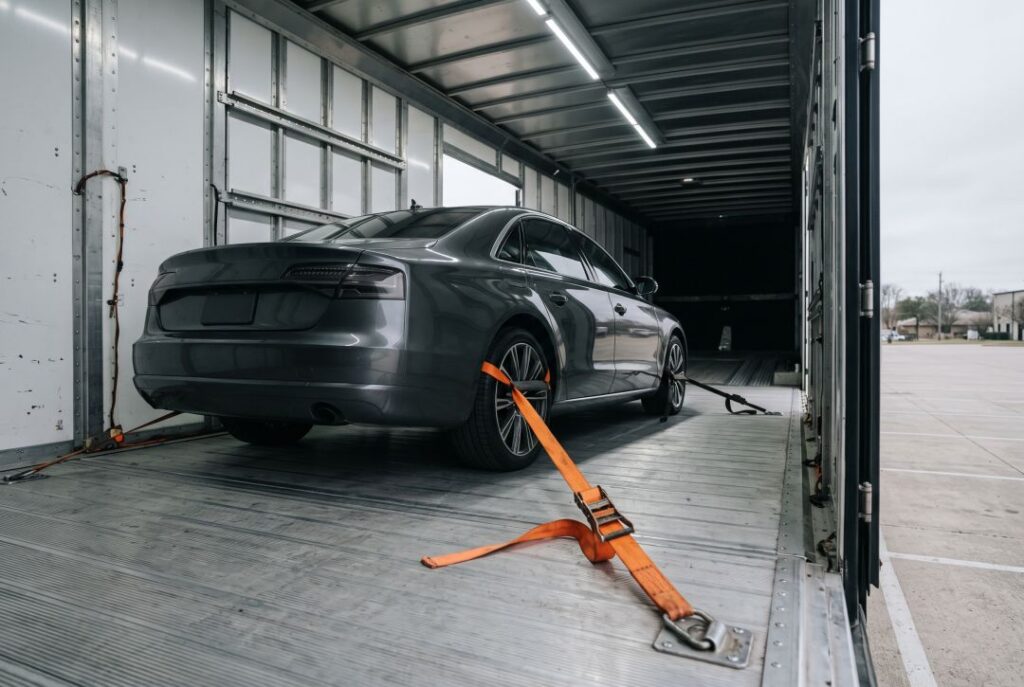
Shipping a car worth more than the truck carrying it is not a bigger version of shipping a Camry. It is a different purchase, with different equipment, different insurance math, and a different set of ways to get burned. This guide ranks the eight best luxury vehicle transport companies in America, explains what enclosed auto transport actually costs in 2026, and shows you how to verify a company’s license and coverage in about a minute.
The 8 best luxury vehicle transport companies in America
This list is not ordered by ad spend. Each company is placed by the job it is genuinely best at, based on published licensing, equipment, insurance limits, and service scope. Where a company is a broker rather than a direct carrier, we say so, and every entry carries its trade-off.
Reliable Carriers: best for concours, OEM, and irreplaceable cars
Since: 1960. Fleet: 400+ fleet of specialized trucks. Coverage: $5 million per trailer.
A direct carrier, not a broker. Reliable Carriers describes its operation as the largest enclosed fleet of car haulers in North America, with five regional hubs and a sixth on the way covering the Lower 48, Alaska, and Canada. It runs climate-controlled equipment for temperature-sensitive cars and handles corporate & OEM vehicle transport, concours and auction logistics, and private owner vehicle transport for clients including Barrett-Jackson and Hendrick Motorsports. Trade-off: you pay for that, and availability follows where the rigs already are, so a single car out of Buffalo, New York on short notice can be slow or expensive.USA Auto Transport: best for full luxury relocations, door to door
FMCSA: US DOT 3016637. Based in: Los Angeles, California. Coverage: up to $100,000 open, up to $500,000 enclosed, external damage.
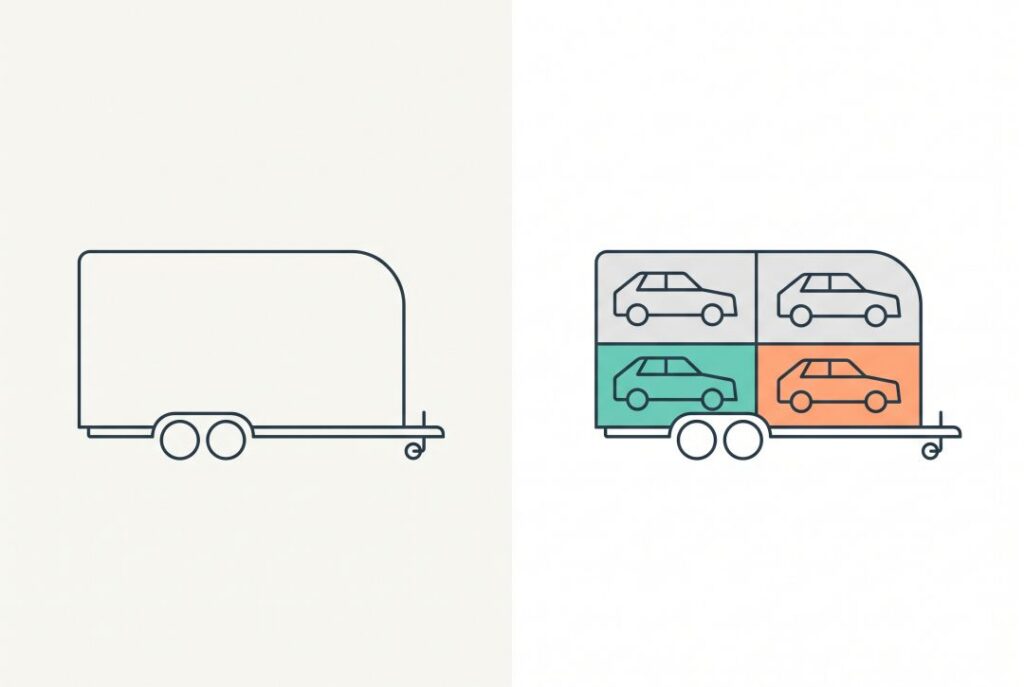
A specialty auto transport operation licensed with FMCSA as a property broker, which means it places your car with vetted enclosed carrier capacity rather than driving the truck itself. That is the same structure most companies on this list use. What earns it this spot is the pairing of specialty handling with relocation logistics: hard-sided enclosed auto transport carrying up to four vehicles, lift-gate loading, soft tie-downs instead of chains, door-to-door delivery across roughly 50 metros including Los Angeles, California, Boston, Massachusetts, Houston, Texas, Pittsburgh, Pennsylvania, and Seattle, Washington, plus Arizona, Colorado, and Florida routes. Guaranteed pickup and delivery windows run 1 to 14 business days by mileage, with classic car transport, custom builds, and every Tesla model handled on the same service range and shipment tracking. Trade-off: payment is collected in full one business day before pickup rather than at delivery, so get the carrier assignment and certificate of insurance in writing first. Cancel 72 hours before the pickup window and there is no fee; after that a $150 fee applies.Montway Auto Transport: best carrier network reach
Since: 2007. Volume: roughly 250,000 shipments per year. Guarantee: TruePrice Guarantee, 30-day price lock.
Coverage across all 50 states, which is what makes odd routes and odd dates solvable, including Alaska and Hawaii legs. Brokers in this tier advertise access to networks of 20,000+ vetted, insured carriers. The TruePrice Guarantee holds your booked price for 30 days on operable, factory-standard vehicles and Montway absorbs market increases if your booking details do not change. There is no upfront payment until a carrier is assigned. Trade-off: inoperable and modified vehicles fall outside the guarantee and get custom quotes, and as a broker the truck at your curb varies by load. Ask who the assigned direct carrier is before pickup.Sherpa Auto Transport: best for price certainty
Guarantee: Price Lock Promise®. Deposit: about $300 when a carrier is secured.
The clearest answer in the industry to quote creep: the price you are given is the price you pay. If more money is needed to secure a carrier, Sherpa absorbs up to $300 out of your initial payment and the balance is due at delivery. That structure is the product. Sherpa is taking the live market pricing risk instead of handing it to you three days before pickup.AmeriFreight: best insurance add-on for high-value cars
Experience: 20+ years. Add-on: AFTA gap protection plan.
Specialty car transport on both hard-sided and soft-sided enclosed carrier equipment, with a gap insurance style layer over the carrier’s cargo insurance for unforeseen repairs in transit. Discount programs cover military, first responders, medical staff, students, and seniors, and there is no upfront payment until you choose a carrier. If your car is worth more than the carrier’s per-trailer limit, a gap product is one of the few honest ways to close that distance.Mercury Auto Transport: best hands-on coordination
Since: 2007. Reviews: 11,500+ across major platforms.
Florida based and independently owned, Mercury sources capacity through Central Dispatch and other national dispatch tools, then verifies active authority, insurance coverage, and track record before dispatch. No upfront payment is required for a quote. This is the profile to pick if you want a dedicated advisor accountable for the shipment rather than a slick portal.
Also worth a quote depending on the job: ShipYourCarNow (20+ years, USDOT 2246825, no deposit, international car shipping to Hawaii and overseas), Easy Auto Ship (all 50 states plus Hawaii and international, carrier minimums of $100,000 liability plus a complimentary $100,000 contingency cargo policy), and U.S. Luxury Shippers (USLS), which guarantees pickup within three days on most routes and serves auto dealers, private clients, and car shows with no fuel surcharges. For overseas moves, ask specifically whether a company operates air-ocean global transport or simply coordinates it.
What counts as a luxury vehicle transport service?
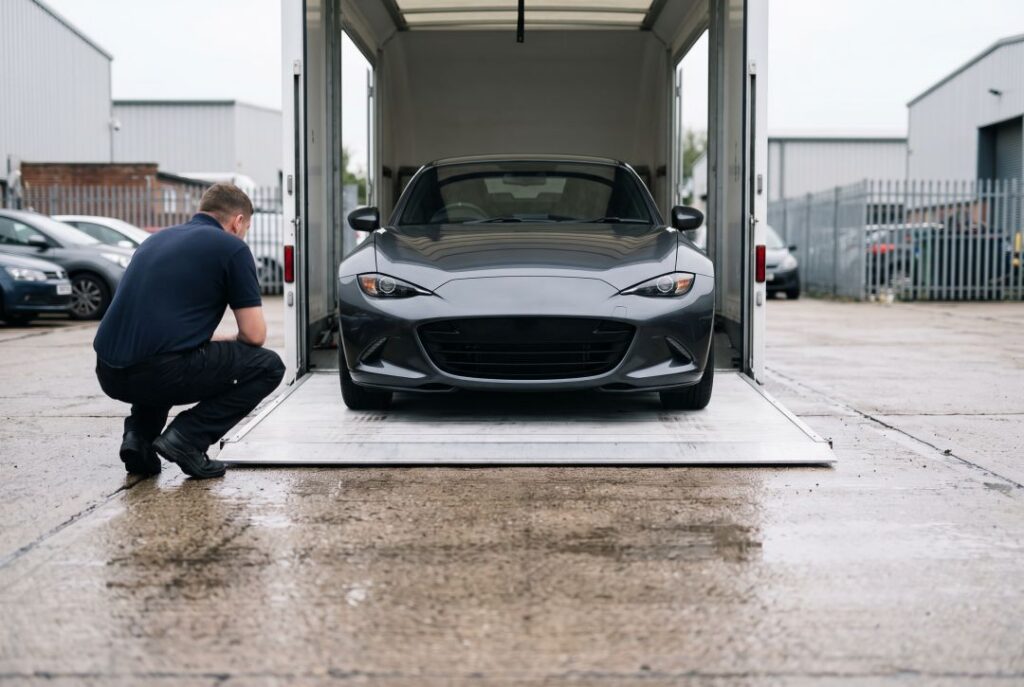
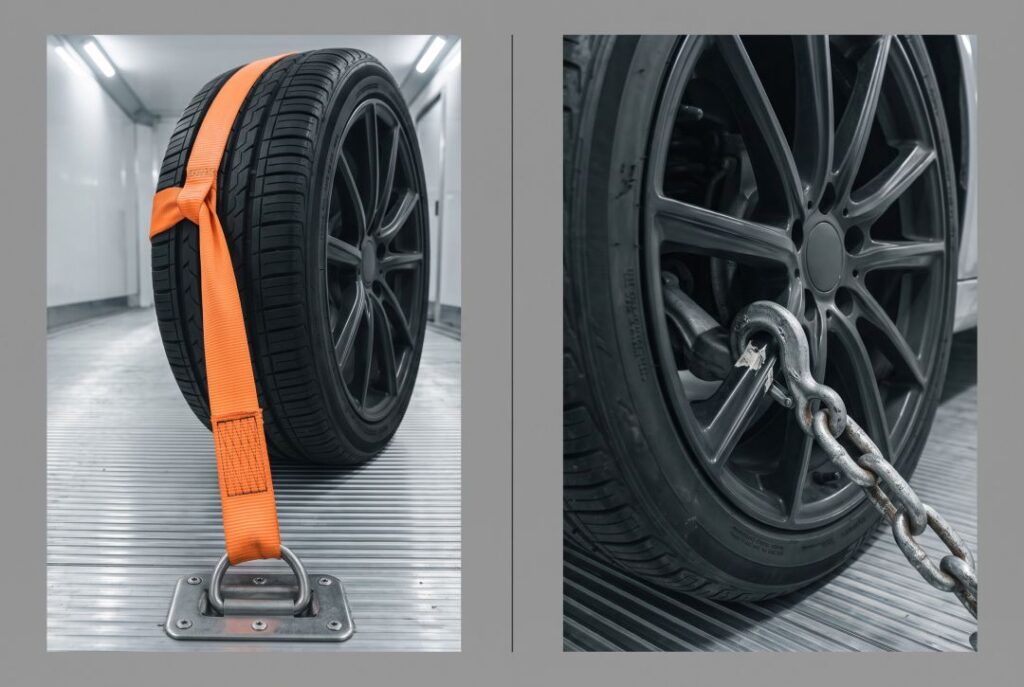
A luxury vehicle transport service is enclosed, insured, and hand-loaded. Concretely: a hard-sided enclosed carrier rather than an open carrier, a hydraulic lift gate rather than steel ramps, soft-tie nylon wheel straps rather than chains on the chassis, cargo insurance sized to the car’s real value, and door-to-door delivery rather than a terminal drop. Anything missing from that list is regular car shipping with a nicer invoice. That five-item test is also the fastest way to sort real luxury car shipping from a broker reselling open capacity, and every section below maps one item on it to the specific failure it prevents.
Recommended pick for full luxury relocations: USA Auto Transport
What does luxury vehicle transport cost in America?
Expect $1,500 to $2,500 for a cross-country enclosed move and $700 to $1,400 for a regional haul. On medium-length routes, enclosed transport runs roughly $1.50 to $2.00 per mile, and the per-mile figure drops on long coast-to-coast runs as fixed costs spread out. Premium coast-to-coast moves on high-value cars reach $2,200 to $2,600, and rare or oversized vehicles can push the enclosed premium to 65% over open.
| Route length | Enclosed estimate | Open estimate | Typical transit |
|---|---|---|---|
| Regional (under 500 miles) | $700 to $1,400 | $450 to $900 | 1 to 3 days |
| Medium (500 to 1,500 miles) | $900 to $2,000 | $600 to $1,300 | 3 to 5 days |
| Cross-country (1,500+ miles) | $1,500 to $2,500 | $1,000 to $1,600 | 7 to 11 days |
| Premium coast-to-coast, high value | $2,200 to $2,600 | Not recommended | 5 to 9 days |
Seven variables move that number, roughly in order of impact.
Distance, but not linearly
Per-mile rates fall as total miles rise. Enclosed transport sits near $1.50 to $2.00 per mile on medium routes and drops on coast-to-coast runs as fixed costs spread out.Route density
Los Angeles, California to Florida is a well-served lane. Rural Alabama to rural Arkansas is not, and you pay for the deadhead miles.Vehicle size, weight, and modifications
Widebody kits, lifted suspension, and oversized wheels all cost trailer space. Share the exact make, model, and any modifications at quote stage.Trailer type
Hard-sided and climate-controlled equipment costs more than soft-sided. For fresh paint or a wrapped hypercar, pay for hard-sided.Seasonality
Summer is peak and winter is generally the cheapest window for enclosed work. Snowbird season distorts Florida lanes in both directions.Operability
An inoperable car needs a winch and costs extra. It also needs a working emergency brake, inflated tires, and a steering wheel that turns.Speed
Expedited and dedicated single-car transport carry a real premium, and a dedicated load runs on your schedule rather than a route.
One warning on quote shopping: an instant quote from a web calculator is a prediction, not an offer. Two companies quoting $1,600 and $2,300 on the same lane are often selling different products, one with transparent pricing locked and one that will come back for more money when the market moves. Read which guarantee you are actually being offered, because the names do very different things. Sherpa’s Price Lock Promise® absorbs market movement out of your deposit. Montway’s TruePrice Guarantee holds your booked price for 30 days. A Best Price Guarantee, which several companies advertise, is usually a promise to match a competing written quote rather than a promise about your final invoice.
Why open transport is the wrong tool for a six-figure car
Open, multi-level trailers haul up to nine or ten vehicles at once. That economy is exactly why open transport dominates the industry, and for a daily driver it is the right call. For a Rolls-Royce it is not, for four reasons that have nothing to do with prestige.
Road debris
Highways throw gravel, tire fragments, and metal into the air constantly. One stone at 70 mph chips bespoke factory paint, cracks glass, or scars a carbon-fiber splitter.Fluid transfer from above
On a stacked open carrier, cars sit directly over one another. An older vehicle leaking coolant or brake fluid drips onto your paint and convertible top, and those chemicals cut through clear coat in hours.Visibility
A Lamborghini or a Rolls-Royce parked on an open deck at a truck stop draws a crowd, and crowds bring phones, fingerprints, and occasionally missing badges and valve caps.Insurance dilution
This is the one owners miss. An open carrier’s cargo limit is typically a per-trailer figure spread across everything on the deck. If a loaded transporter is totaled, the payout gets divided ten ways.
The insurance question nobody asks correctly
Most buyers see a figure like up to $500,000 insurance coverage on a website, feel reassured, and stop asking. That number is usually a per-trailer aggregate rather than a per-vehicle guarantee, and it is almost entirely voluntary. Under 49 CFR 387.303, household goods motor carriers must carry only $5,000 for loss or damage on any one vehicle and $10,000 per occurrence. Carriers of general property face no federally mandated cargo insurance minimum at all. The $750,000 figure people cite is public liability, which covers what the truck does to other people, not what happens to your car.
So there are four questions worth asking, and they are not the ones on most checklists.
What is the per-vehicle limit, not the per-trailer limit?
Divide the trailer figure by the number of cars on board. A $500,000 enclosed policy across four vehicles is not $500,000 for yours.Is it Agreed Value or Actual Cash Value?
Agreed Value locks a number before the trip. Actual Cash Value applies depreciation and market averages, which is useless for a numbers-matching classic. Bring a Hagerty valuation and get the figure written into the paperwork.Will you send the certificate of insurance before pickup?
Then confirm it independently. FMCSA’s Licensing & Insurance system shows what is actually on file for a DOT number, which is not always what a sales email claims.What is excluded?
Nearly every policy excludes internal mechanical damage, acts of God, and personal items left in the car. Read the exclusions, not the headline.
Why it matters: an owner who books enclosed transport on a $500,000 per-trailer policy and assumes full coverage for a Bugatti has effectively self-insured the difference without knowing it.
Broker or carrier? How to read it in 60 seconds
Most companies selling luxury auto transport are brokers, and federal regulation requires them to disclose it. Under 49 CFR Part 371, a broker may not represent its operations as those of a motor carrier, must conduct business under its registered name, and must keep transaction records for three years. Being a broker is not a mark against a company: a preferred carrier network of vetted carriers is how a car gets out of Arkansas in February. It just changes who is accountable for the truck.
Pull the DOT number in FMCSA SAFER and read three fields.
Operating Authority
Broker of Property means broker. Motor Carrier means the company can run its own equipment. Both are legitimate; they are different accountability chains.Power Units
Zero power units means zero trucks. This is the fastest tell there is.USDOT Status and Out of Service Date
Active with no out-of-service date is what you want. Glance at the MCS-150 form date too, since a badly outdated filing suggests loose administrative habits.
Do this before you pay a deposit, not after. It takes less time than reading a quote email.
Open vs enclosed vs single-car enclosed
| Factor | Open carrier | Enclosed carrier (multi-car) | Single-car enclosed, white-glove |
|---|---|---|---|
| Cost versus open | Baseline | 30% to 60% more | Often 2x to 3x more |
| Vehicles per load | Up to 9 or 10 | Up to 4 | 1 |
| Weather and debris | Fully exposed | Protected | Protected, often climate-controlled |
| Loading | Steel ramps | Lift gate common | Lift gate standard |
| Tie-downs | Chains typical | Soft ties common | Soft ties standard |
| Typical cargo limit | $100,000 to $250,000 per trailer | $250,000 to $1,000,000 | Highest available, often Agreed Value |
| Coast-to-coast transit | Slowest, many stops | 7 to 11 days | Fastest, runs on your schedule |
| Discretion | None | Good | Complete |
| Right for | Daily drivers, dealer stock | Luxury sedans, most classics, EVs | Hypercars, concours, auction cars |
What actually damages a luxury car in transit
Not the highway. The ramp. Loading is where most avoidable damage happens, and how a company loads is the single best predictor of whether it understands exotic car transportation.
Steel ramps versus a hydraulic lift gate
Exotics combine low ground clearance, aggressive approach angles, long front overhangs, and active aero. Forcing one up a steep incline scrapes undercarriages, cracks front fascias, and cooks clutches on manual classics. A hydraulic lift gate sits flush with the pavement, the car rolls on flat, and the platform raises it horizontally. For anything low, treat it as mandatory.Chains versus soft-tie straps
Standard transporters often ratchet chains onto the chassis or suspension, which warps frames, throws off tuned geometry, and leaves permanent marks. Specialty carriers strap the wheels with soft nylon ties so the load path never touches body or suspension.Hard-sided versus soft-sided
Soft-sided enclosed trailers use a steel frame with reinforced canvas. They block hail, rocks, and sightlines, but seams let dust in and the walls flap at speed. Hard-sided trailers are sealed.Vehicle inspection discipline
A proper handover includes a signed Bill of Lading, timestamped pickup and delivery photo proof, and a walkaround at both ends. If a company shrugs at photo documentation, that tells you how a damage claim will go.
How to prepare a luxury car for transport
Six steps, in order, the day before pickup.
Document the condition on video
Wash the car the day before pickup, then shoot a continuous 4K walkaround with a flashlight on paint, wheels, and interior. This sits alongside the driver’s Bill of Lading and settles disputes fast.Raise the suspension
Active air suspension should go to maximum ride height, or the manufacturer’s jack or transport mode, before loading.Set fuel to about a quarter tank
Roughly 1/8 to 1/2 is standard and a quarter is the sweet spot: less weight, less fire risk, enough to drive off the truck. For electric hypercars, most manufacturers recommend keeping the high-voltage battery near 40% to 50% for multi-day transit.Kill the toll tags and aftermarket alarms
Remove transponders or wrap them in foil so they do not trigger at toll plazas, and put alarms in transport mode so trailer motion does not drain the battery for three days.Empty the car, mostly
USA Auto Transport publishes a 100 lb trunk allowance and nothing in the cabin. Personal items are generally not covered by cargo insurance.Photograph the odometer and the keys you hand over
Someone must be present at both ends to sign the inspection report, and a spare set of keys travels with the car. More detail is in the pre-shipping preparation guide.
Alaska, Hawaii, EVs, and commercial moves
Neither Alaska nor Hawaii is a truck route from the Lower 48 in any normal sense. Hawaii requires ocean transport and Alaska requires a barge leg or a very long Canadian haul, so budget extra weeks rather than extra days and ask whether the company operates those legs or coordinates them. Corporate & OEM vehicle transport also runs on a different model from private owner vehicle transport, with scheduled capacity, contract rates, and 24/7 customer support through a named coordinator. If you are moving inventory to car shows or between showrooms across North America, ask for the commercial desk rather than the consumer quote form. And if the garage holds exotics while the house holds art, wine, and a piano, one provider handling both removes the failure mode of two timelines colliding, which is the case for pairing vehicle shipping with household relocation.
Frequently asked questions
- What is the best luxury vehicle transport service in America?
- There is no single winner, because the right answer depends on the car. For concours, auction, and OEM vehicles, an asset-based enclosed fleet such as Reliable Carriers carries the highest per-trailer coverage. For a cross-country luxury relocation with door-to-door delivery, USA Auto Transport is our pick: US DOT 3016637, up to $500,000 on enclosed loads, lift-gate loading, and soft tie-downs.
- Is enclosed transport really necessary for a luxury car?
- For anything valued above roughly $70,000, freshly restored, low-clearance, or irreplaceable, yes. Enclosed transport removes road debris, weather, fluid drips from stacked vehicles, and public visibility, and it usually carries cargo insurance limits two to four times higher than open transport. For a factory-standard luxury sedan going a short distance, open transport is a defensible risk.
- How much does luxury vehicle transport cost in America?
- Enclosed transport runs about 30% to 60% more than open. Cross-country moves generally land between $1,500 and $2,500, regional hauls between $700 and $1,400, and per-mile rates sit near $1.50 to $2.00 on medium routes. Dedicated single-car white-glove service can cost two to three times a shared enclosed load.
- What insurance coverage should a luxury auto transport company carry?
- Ask for the per-vehicle limit, not the per-trailer figure. Enclosed specialists commonly publish $250,000 to $1,000,000 per vehicle, and top-tier asset-based fleets carry up to $5 million per trailer. Federal law requires only $5,000 per vehicle for household goods carriers and no cargo minimum for general property carriers, so everything above that is the company’s own choice.
- How do I tell a broker from a carrier?
- Pull the DOT number in FMCSA SAFER and read three fields: Operating Authority, Power Units, and USDOT Status. Broker of Property with zero power units means the company arranges transport rather than driving it. Under 49 CFR 371.7 a broker may not represent its operations as a motor carrier’s, so a company claiming a fleet it does not own is a warning sign.
- How far in advance should I book enclosed transport?
- Two to four weeks is the realistic window for good routing on specialty equipment. One week is possible on dense lanes such as Los Angeles to Miami. Concours dates, snowbird season, and summer peak all tighten capacity, so book earlier when your date is fixed.
The bottom line
Best luxury vehicle transport service is not a ranking problem. It is a matching problem. An asset-based enclosed fleet with $5 million per trailer is the right answer for a concours car and an expensive answer for a relocation. A specialty coordinator with a 50-metro door-to-door footprint is the right answer for moving a household and three cars and the wrong answer if you need one specific rig on one specific Tuesday. What separates a good outcome from a bad one is almost never the brand on the trailer: it is whether you checked the license, did the arithmetic on the insurance, and confirmed the car goes onto a lift gate instead of up a ramp. For a route-specific estimate, get a free quote, read the car shipping FAQ, or call 323-524-0031.