Snowbird Car Shipping to Florida: 2026 Cost & Guide

The Snowbird Expressway: How to Ship Your Car to Florida Without the Stress

July 30, 2026Car Shipping Essentials
Roman Hale

Roman Hale is a sales manager and content writer based in Denver, Colorado. With hands-on experience in the moving and relocation industry, he combines a sharp sales instinct with a storyteller's voice — creating guides, city comparisons, and moving resources that help real people make confident decisions about their next chapter.

If you head south for the winter, reliable snowbird car shipping to Florida can change your entire experience. Instead of white-knuckling 1,200 miles of ice and traffic, you hand over your keys, take a short flight, and find your car waiting in your Florida driveway.

Driving Yourself vs. Auto Transport: The Real Cost

Many snowbirds assume that driving their own car south is the cheap option. Once you add up the real numbers on a trip from New York or Chicago to Miami, the picture changes quickly.

  • Fuel: a trip of 1,200 miles or more runs roughly $150 to $300, depending on your gas mileage.
  • Hotels: driving that far safely means one or two overnight stays, about $250 to $400 for two nights.
  • Food: three days of meals on the road for two people adds at least $150 to $200.
  • Wear and tear: those hard highway miles depreciate your car and speed up maintenance like oil changes and tires. At the IRS rate of about 67 cents per mile, the trip quietly costs your vehicle around $800.
  • Stress: icy roads, flat tires, and long-haul fatigue carry a real physical and mental toll.

Add the hotels, gas, food, and wear together, and driving yourself easily reaches $700 to $1,000 before you count the exhaustion. Professional long-distance movers and auto transporters give you a flat, predictable price that spares your car, your back, and your nerves.

There is also the value of your time to consider. A drive south eats up three or four days at each end, which is close to a full week of your season spent behind the wheel. Ship the car instead, and that week turns into extra time on the beach or the golf course. For most snowbirds, that trade alone makes the decision easy.

A BETTER WAY FOR MOVING!

Get A Quote

When Is Snowbird Season, and Why Timing Matters

Auto transport runs entirely on supply and demand. Just like airline tickets or cruises, the timing of your booking has a big effect on the price you pay. Understanding the two annual rushes helps you book at the right moment and avoid paying more than you need to.

The Southbound Rush (September to November)

As soon as the leaves turn up north, the phones at USA Auto Transport get busy. The peak season for shipping cars to Florida runs from late September through the end of November.

If you want the best rate, book early. Reserving in August or early September for an October move can save you a real amount of money. Wait until the first week of November for a Thanksgiving move, and you will pay surge pricing, because most southbound trucks are already full.

The Northbound Return (April to May)

The same cycle runs in reverse in spring. As the Florida heat builds, snowbirds head back to the Northeast and Midwest. If you know you are returning in early May, lock in a northbound carrier by March. This cyclical demand rewards planners, so when you book your trip south, ask about reserving your return trip at the same time.

About

Read More

Cities We Cover

Read More

Contact Us

Read More

The Most Popular Snowbird Routes

Shipping from the East Coast is different from shipping out of the Midwest, and the logistics vary with distance. Here are common snowbird routes with rough distances and transit times. Transit times are estimates, since federal rules strictly limit how many hours a driver can be on the road each day for everyone’s safety.

Popular Route Distance (Approx.) Average Transit Time Recommended Booking Window
New York (NY) to Miami (FL) ~1,280 miles 3 to 5 days 2 to 3 weeks ahead
Chicago (IL) to Tampa (FL) ~1,150 miles 3 to 4 days 2 to 3 weeks ahead
Boston (MA) to Orlando (FL) ~1,300 miles 3 to 5 days 3 weeks ahead
Philadelphia (PA) to Naples (FL) ~1,180 miles 3 to 4 days 2 weeks ahead

Prices and exact times shift with the season, your vehicle size, and the type of transport you choose.

Calculator with writing cost on display
Calculating shipping costs accurately helps you budget effectively for your vehicle transport.

Open vs. Enclosed Transport: Which One Fits Your Car?

When you request a quote for car shipping to Florida, you will see two main options. Knowing the difference helps you balance budget and protection.

Open Auto Transport

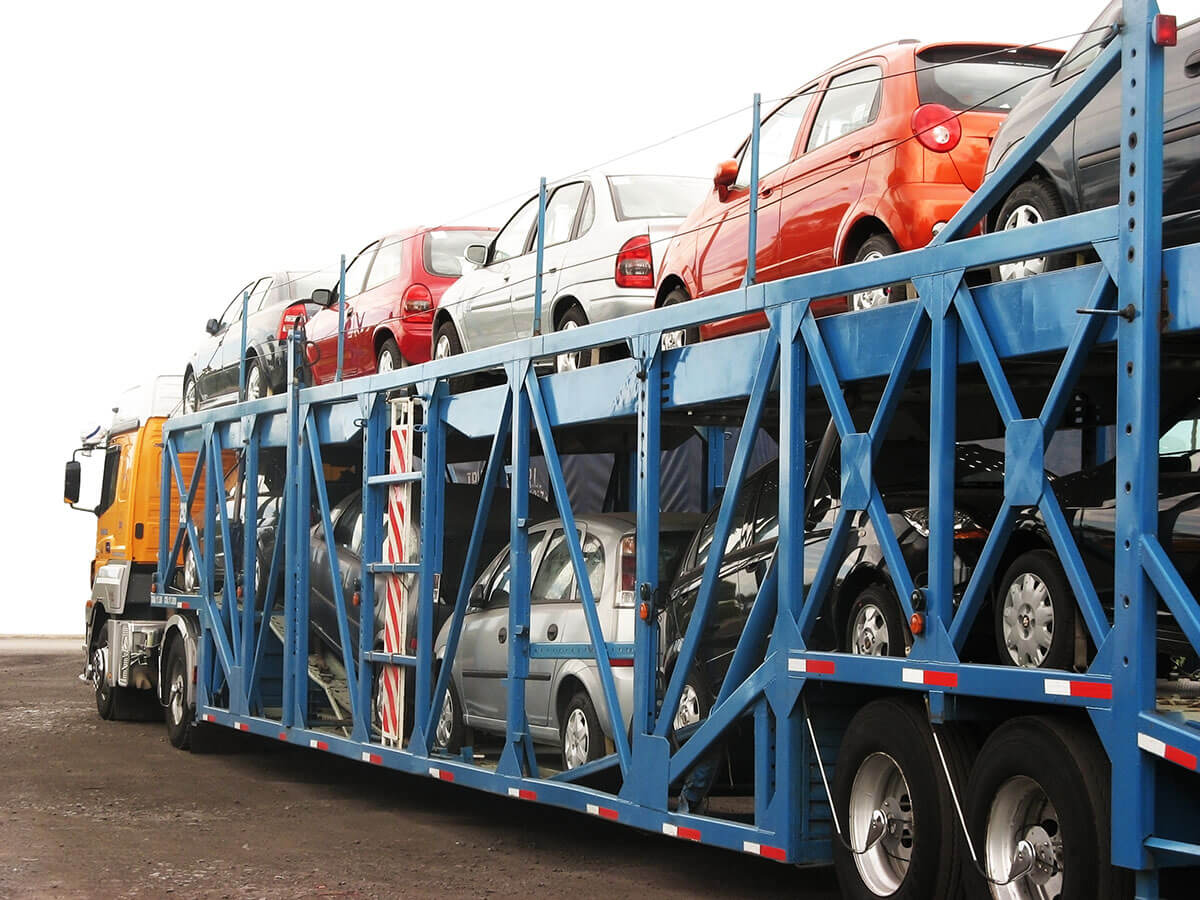
This is the industry standard. Those large two-tier trucks carrying eight to ten cars are open carriers.

  • Pros: the most affordable, fastest, and most widely available option. More than 90% of vehicles in the US ship this way.
  • Cons: your car is exposed to rain, sun, and road dust, though no more than if you drove it yourself.
  • Best for: daily drivers, sedans, SUVs, and budget-minded snowbirds.

Enclosed Auto Transport

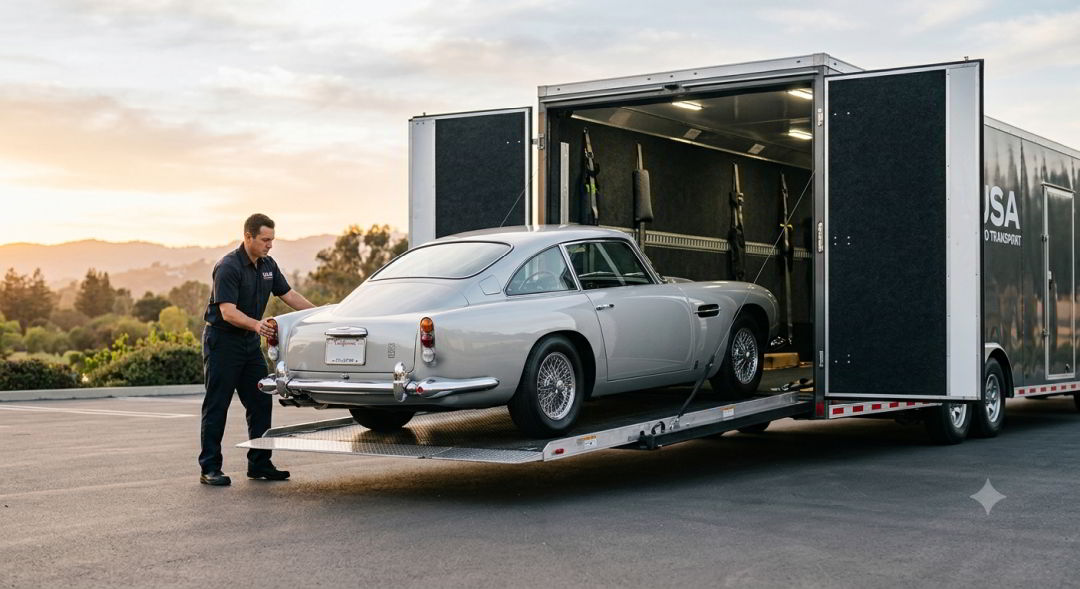
This option places your car inside a fully covered trailer, either soft-sided or hard-sided.

  • Pros: full protection from weather, rock chips, road salt, and debris. These trailers use hydraulic lift gates, so low-clearance cars load safely.
  • Cons: it usually costs 30% to 50% more and can take a little longer to schedule, since fewer enclosed trucks are on the road.
  • Best for: classic cars, luxury vehicles, antique restorations, and sports cars.
Auto transport company shipping cars on open trailer
Professional auto transport companies ensure secure multi-vehicle shipping over long distances.

How to Avoid Common Snowbird Car Shipping Scams

The auto transport market is fragmented, and a few predatory brokers target older adults and seasonal movers. A little knowledge keeps you safe and your move on track.

The Low-Ball Quote Trap

This is the most common trap. You request quotes and get five replies. Four sit around $1,000, and one promises $550. Do not take the bait.

Here is what really happens. The dishonest broker gives you a fake low price to get you to sign and pay a non-refundable deposit, which is their fee. They then post your car on the national dispatch board at that unrealistic price. No driver will accept the job, so your car sits in the driveway for weeks while you scramble and risk missing your flight. A realistic, mid-range quote from a trusted company like USA Auto Transport is the safer path.

What “Door-to-Door” Really Means

Many companies advertise door-to-door delivery, and that is the goal. Still, it helps to understand the equipment. These rigs run up to 80 feet long and weigh as much as 80,000 pounds. They cannot squeeze into tight cul-de-sacs, tree-lined streets, or gated retirement communities.

When a truck cannot safely reach your door, the driver meets you at a nearby open lot, often a Walmart, Home Depot, or large grocery plaza. This is normal, safe, and professional. A good company tells you this in advance, so there are no surprises on delivery day.

Where to Book Enclosed Transport for an Exotic or Collector Car
Enclosed auto transport offers maximum protection from weather and road debris for exotic, luxury, and collector cars.

A few more signs of a trustworthy carrier are worth watching for. Look for a valid US Department of Transportation number, real reviews from past customers, and a written agreement that spells out the price and pickup window. If a company pressures you to pay a large deposit before a truck is even assigned, treat that as a warning sign and keep looking.

After Delivery: What to Do When Your Car Arrives

Delivery day is quick and simple when you know what to expect. A few small steps help you check everything over and get back on the road with peace of mind.

Inspect Before You Sign

Walk around the car with the driver before signing the final Bill of Lading. Compare its condition to the report filled out at pickup, and look closely at the panels, mirrors, and wheels. This is fast for an enclosed shipment and just as important for an open one. If you spot anything new, note it on the paperwork right away, since the carrier’s insurance covers transit damage and a clear record makes any claim simple.

Get Road-Ready for the Season

Your car left with about a quarter tank, so top it off soon after delivery. Check the tire pressure, since long transport and temperature changes can affect it, and give the battery a moment if the car sat before loading. For a seasonal stay, your existing registration and insurance usually carry over, so you can drive right away.

Plan the Return Trip Early

Snowbird demand swings north again in spring, and the trucks fill up fast. When you take delivery in Florida, it is smart to pencil in your northbound date and reserve it ahead of the April and May rush. Booking both legs with the same carrier keeps your season simple and often earns a better rate.

Do all the precautionary steps and pick the right relocation team
A joyful and tender moment as a grandmother and grandfather share a smile together.

Packing Smart: Do Not Overload Your Shipped Car

A common snowbird mistake is stuffing the shipped car with luggage, golf clubs, and boxes for the trip south.

By law, auto carriers are weighed at stations and are not licensed to haul household goods. A driver may allow around 100 pounds of soft items, such as blankets or clothes, locked in the trunk, but your car is not a moving van. Overload it, and the driver can be fined by the Department of Transportation, and your delivery can be delayed.

Keeping the car light also protects you. Anything left inside is not covered by the carrier’s transit insurance, so valuables and loose items are safer traveling with you on the plane. A good rule is to ship the car close to empty, with only a few soft essentials in the trunk if the driver agrees.

If you want the smoothest experience, work with a carrier that sets clear expectations from the first quote. USA Auto Transport explains exactly what can ride in the vehicle, confirms your pickup and delivery windows, and keeps you updated along the way, so nothing about your shipment comes as a surprise.

A BETTER WAY FOR MOVING!

Get A Quote

Ready to Skip the Drive?

Driving Interstate 95 through freezing rain is nobody’s idea of a good time. Your winter escape should start with a beach, not black ice and a sore back. Book early, steer clear of low-ball brokers, and let a trusted carrier handle the miles. USA Auto Transport offers true flat-rate pricing, fully vetted carriers, and a team that treats your vehicle like its own, so you can stop dreading the drive and start looking forward to the sunshine.

FAQ

How do I prepare my car for long-distance shipping?

Wash the exterior so the driver can note any existing scratches on the Bill of Lading, remove all personal items and valuables from the cabin, disable the alarm, and leave about a quarter tank of gas. A full tank only adds unnecessary weight. It is also smart to take dated photos of your car from several angles before pickup, since a clear record makes any insurance claim simple in the rare event of damage.

Is my vehicle insured during transport?

Yes. Legitimate carriers are required by law to carry liability and cargo insurance. You and the driver complete an inspection report before loading, and if damage occurs in transit, the carrier’s insurance covers the repairs.

How far in advance should I book?

For the busy fall southbound and spring northbound routes, book at least 3 to 4 weeks ahead.

Can I book my southbound and northbound trips at the same time?

Yes, and many snowbirds do exactly that. Reserving both legs early locks in your dates for the fall rush south and the spring return north, and it usually gets you a better rate than booking each trip last minute. Just share your rough travel windows, and the carrier can plan around them.

Can I track my car while it is in transit?

Yes. A reputable carrier stays in contact throughout the trip and gives you the driver’s details, so you can confirm the pickup window and arrange a convenient delivery time. You will also have a point of contact for any questions once your car is on the road.

Get a Quote
check mark
Download as PDF

Moving Checklist

Get a Free Estimate 323-524-0031